

Chief Operating Officer (COO) Program
Strategic leadership for execution, transformation and scale.
- Integrated COO Leadership Model
- Enterprise-Focused, AI-Enabled Curriculum
- Negotiation, Political Acumen & Financial Stewardship Skills
- Alumni Access and Melbourne Business School Certification
The program learning will pause for holidays during Christmas (24 Dec 2026 – 1 Jan 2027) and Chinese New Year (5 Feb – 12 Feb 2027).
Future-Proof Your Career
Emeritus and Melbourne Business School unite to offer an exclusive opportunity. Enroll by Invalid liquid dataand get A$400 program fee benefit. Connect with the Program Advisor to know more. Limited seats available. Reserve your spot today!
Application fee: Invalid liquid data
Advancing the strategic mandate of today’s global COO
It is this evolving mandate that the Chief Operating Officer Program from Melbourne Business School (MBS) is designed to advance. Built for senior operating leaders preparing to step into, or excel within, the COO role, the program equips participants with applied executive frameworks in decision intelligence, automation, and AI governance. It strengthens the capability to align enterprise-wide operating models with corporate strategy, customer-centric value creation, and disciplined capital allocation. Participants learn to translate complexity into coordinated action and drive operational value at scale.
57%
60–67%
Program Highlights

Integrated COO Leadership Model
Including strategy, operations, transformation and leadership

Flexible Executive Learning
Design Combining asynchronous engagement with high-impact live sessions.

Enterprise-Focused Curriculum
Addressing organisation-wide value creation through digital enabled and data-informed operations

Capstone Project with Business Impact
Application-based, focused on measurable enterprise outcomes.

C-Suite Influence & Stewardship Toolkit
Encompassing executive judgement, negotiation capability, board-level communication and financial stewardship

Melbourne Business School Credential
Formal Certificate from Melbourne Business School, Australia’s top-ranked business school.

MBS Executive Alumni Access
Which includes select benefits and networking opportunities
Program learning experience

5 live online faculty sessions
Live online sessions led by Melbourne Business School faculty, focused on advanced frameworks, contemporary research, and executive-level perspectives.

5 live online industry expert sessions
Live online sessions led by industry experts, offering practical insights into real-world operational, transformation, and leadership challenges.

15+ live online success coach sessions
Live online support and engagement sessions facilitated by a dedicated Program Success Coach to promote reflection, application, and peer discussion

Flexible and faculty-led learning
Asynchronous learning delivered through bite-sized, faculty-led video content, enabling participants to engage at their own pace.

Capstone project
A guided capstone project enabling participants to apply program learning with structured support from the Program Success Coach.

5+ playbook activities
Playbook-based activities designed to translate learning into practical tools and frameworks applicable to participants’ professional contexts.

Peer learning
Peer learning enabled through moderated discussion forums and/or online activities, fostering cohort-based exchange and shared insight.

2-day in-person campus immersion
The program concludes with an immersion at the Melbourne Business School campus to promote face-to-face learning and networking.
What the MBS COO Program Delivers

Translate Strategy into Operations
Interpret enterprise strategy and convert it into clear, organisation-wide operational priorities.

Design Scalable Operating Systems
Diagnose performance bottlenecks and architect high reliability systems built for scale and complexity.

Lead End-to-End Transformation
Design and sequence transformation initiatives that align structure, processes, capabilities and culture.

Evaluate AI and Digital Investments
Assess and prioritise AI and digital interventions based on readiness, value potential and governance.

Manage Enterprise Ecosystems
Analyse supply, partner and customer-value systems to build resilient, customer-aligned operations.

Apply Financial Insight to Operations
Use financial and commercial data to inform operational decisions that drive enterprise value.
About Melbourne Business School
Melbourne Business School is the graduate business school of the University of Melbourne and a leading centre for executive education and management research in the Asia–Pacific. With a strong global outlook and deep industry engagement, the School develops leaders equipped to navigate complexity, drive performance, and create lasting impact.
Global Rankings
#1 in Australia | #19 globally — QS World University Rankings 2026
#1 in Australia | #38 globally — Shanghai Jiao Tong ARWU 2025
#1 in Australia | #37 globally — Times Higher Education World University Rankings 2026
Accreditations
AACSB
EQUIS
Who Is the MBS COO Program For?
The Chief Operating Officer (COO) Program is designed for senior executives preparing to assume broader enterprise-level responsibility for execution, transformation and organisational performance.
It is particularly suitable for:
COO-track executives and senior operating leaders:
Translating high-level strategy into large-scale execution.
Senior leaders with enterprise transformation mandates:
Driving organisation-wide change, operating model redesigns or major productivity programs.
Business and functional leaders:
Moving beyond functional excellence into integrated, cross-value chain leadership.
Professionals preparing for expanded executive roles:
High-potential talent mastering cross-functional orchestration and executive judgment.
Curriculum
Pillar 1: Strategy and Executive Leadership
This pillar positions the COO as a true enterprise co-pilot bridging strategy, execution and governance while shaping decisions that move enterprise value. Participants strengthen executive judgment, board alignment and global operational leadership.
Module 1: The COO Leader as Strategic Partner (Live)
Modern COO mandate
CEO–COO partnership
Board alignment
Enterprise value levers
Module 2: Strategy-to-Execution Architecture
Translate strategy into operating plans and OKRs
Execution rhythms
Value realisation
Module 3: Decision Science and Executive Judgment
Decision frameworks
Bias mitigation
Scenario planning
High-stakes judgment
Module 4: Global Strategy and Geopolitical Risk in Operations
Global operating models
Geopolitical mapping
Cross-border compliance and resilience
Pillar 2: Operational Excellence, Scalable Processes and Resilience
Focused on building high-performing operating engines, this pillar equips COOs to scale excellence, manage trade-offs and design resilience into day-to-day execution.
Module 5: Operational Excellence Foundations
Value-stream mapping
Lean fundamentals
Flow, efficiency and reliability economics
Module 6: Process Redesign, Flow and Continuous Improvement at Scale
Process redesign and flow thinking
Constraint and bottleneck management
Throughput optimisation across operations and services
Module 7: Performance Architecture and Execution Governance
Enterprise performance architecture designStrategic metrics (KPIs, OKRs and trade-off management)
Dashboarding for decisions, not for reporting
Aligning incentives, accountability, and outcomes
Module 8: Fast-Cycle Execution, Agility and Operational Resilience (Live)
Fast-cycle execution models
Strategy-to-execution bridging mechanisms
Operational resilience by design
Leading under disruption and uncertainty
Pillar 3: Transformation Leadership and Operating Model Reinvention
This pillar enables COOs to govern and lead enterprise-wide transformation - reimagining operating models while ensuring continuity, control and value delivery.
Module 9: Scoping and Governing Enterprise Transformation
COO role as governor
Governance vs sponsorship
Scoping transformation (projects/programs/enterprise transformation)
Why transformations fail
Module 10: Operating Model and Organisation Design
Operating models and their five elements
Decision rights
Multiple models in one organisation
Operating model canvas
Managing trade-offs
Module 11: People, Capability and Leadership Through Transformation
Culture and behaviour change
Influence mapping
Succession and talent
Module 12: Sequencing, Measuring and Sustaining Transformation
Sequencing transformation
Risk and irreversibility
Operating while transforming
Realising benefits
Pillar 4: AI-Enabled Operations and Digital Transformation
Designed for COOs navigating the shift from digital ambition to operational impact, this pillar focuses on embedding AI, analytics and automation into core operating systems at scale.
Module 13: AI as an Operating Advantage: Strategy, Value and Scale
Where AI creates real operating advantage
Embedding AI into value streams and decision flows
Moving beyond pilots to sustained operational impact
Module 14: From Analytics to Action (Live)
Moving beyond dashboards
The data analytics journey
Analytic maturity of organisations Lessons from failures
Module 15: Automation, Robotics and Digital Twins
Choosing what to automate, augment or leave to humans
Redesigning work with robotics and AI
Connected operations (IoT, data, and real-time control)
Digital twins for operational planning and performance
Module 16: Governing AI at Scale: Risk, Control, and Accountability
The AI lifecycle
MLOps for reliability, performance and control
AI risk, compliance, and regulatory readiness
Responsible AI and trust in operations
Pillar 5: Supply Chain, Ecosystems and Customer-Centric Ops
This pillar strengthens the COOʼs ability to orchestrate complex supply networks, partner ecosystems and customer-facing operations with resilience, speed and profitability.
Module 17: Supply Chain and Network Strategy
Network footprint and capacity design
Resilience and risk buffering
Inventory and working capital strategy
Cost-to-serve and profitability
Module 18: Ecosystem, Supplier and Partner Orchestration
Supplier and partner segmentation
Ecosystem governance models
Contracting and incentive design
Dependency and concentration risk
Module 19: Customer-Centric Operations and Experience Execution
Customer value and journey mapping
CX-to-operations translation
Service model and SLA design
Omnichannel execution integration
Module 20: Sustainable, Circular and Net-Zero Operating Systems (Live)
Circular operating model design
Sustainable sourcing and suppliers
Net-zero operational pathways
ESG-integrated decision-making
Sustainability performance governance
Pillar 6: Financial Stewardship, Commercial Excellence and Value Realisation
Anchored in enterprise economics, this pillar sharpens the COOʼs command over P&L performance, capital allocation and commercial execution to drive sustained value realisation.
Module 21: P&L Ownership and Cost-to-Serve Economics
Margin levers
Unit economics
Cost structures
Commercial value drivers
Module 22: Strategic Finance: Scenario and Forecasting Models
Strategic forecasting
Capital allocation
Value-based decision modelling
Module 23: M&A Integration, Synergy Realisation and Cost Transformation (Live)
Due diligence
Integration planning
Synergy capture
Restructuring programs
Module 24: Commercial Operations: Pricing, Channels and GTM Alignment
Pricing operations
Channel economics
Fulfilment models
Sales–ops alignment
Pillar 7: Capstone project
Participants would engage in a curated set of applied leadership playbooks, designed to translate program insights into practical decision frameworks and organisation-ready action tools
Note: The modules and scope are indicative and subject to change as per program requirements without prior notice.
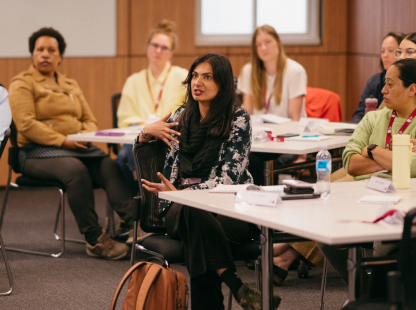
Executive case dialogues and applied learning
The program is grounded in real-world executive cases drawn from a wide range of large, complex organisations operating in Australia and internationally. These cases are used to explore strategic, operational, technological, and financial decisions faced by senior leaders, with an emphasis on execution, trade-offs, and organisational consequences
Live online sessions and masterclasses

The COO leader as a strategic partner

AI strategy for operations & value creation

M&A integration, synergy realisation & cost transformation

Turnaround Leadership: Fixing a Broken Operating Model

Agentic AI at Scale in the Real World: What Actually Worked (and What Failed)

Enterprise agility & fast-cycle execution

Sustainable & circular operating systems

The COO–CEO Dynamic in High-Growth and Crisis Contexts

Workforce Augmentation: Redesigning Leadership in AI-Augmented Organisations

Building Supply-Chain Resilience in Geopolitically Fragmented Markets
Note: The listed topics are indicative/tentative and subject to change without prior notice as per program requirements.
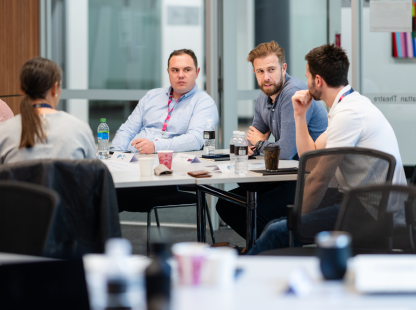
2-day campus immersion experience
The program includes a concluding two-day, in-person immersion at the Melbourne Business School campus, providing participants with the opportunity to engage more deeply with program themes in a residential executive education setting.
The immersion is designed to support reflection, synthesis, and peer exchange. This on-campus experience will facilitate direct interaction with faculty and peers, strengthening professional networks and reinforcing the program’s learning community.
Note: The 2-day campus immersion and networking experience is optional to attend. However, participants are strongly encouraged to attend this in-person experience to engage with MBS faculty and peers, experience the campus environment, and build meaningful executive connections.
Faculty
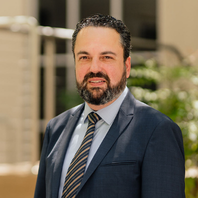
Yalçın Akçay
Professor of Operations Management
He received his dual-title PhD from the Penn State Smeal College of Business. Previously, he was an Associate Professor at Koç University.
Yalçın’s research focuses on reven...

Jenny George
Dean, Melbourne Business School; Professor of Operations
I’m an experienced Dean, CEO and Company Director, shaping leadership in modern Australia, helping people reimagine the future to deliver positive impact through waves of tech...
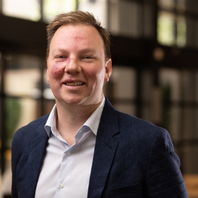
David Keith
Associate Professor, Academic Director (MBA & Master of Marketing Programs)
After completing his PhD in Engineering at the Massachusetts Institute of Technology, David joined the faculty at the MIT Sloan School of Management in the System Dynamics gro...
Executive Playbook Activities
Strategy activation playbook: Translating strategy into execution and leadership alignment
Operational excellence blueprint: Diagnosing, redesigning and optimising operational systems
Operating model & transformation playbook: Structuring large-scale transformation and organisational change
AI-driven operations playbook: Prioritising AI opportunities and designing AI-enabled operating models
Ecosystem & customer value playbook: Reframing operations around partnerships, platforms and customer value
P&L & value realisation playbook: Driving revenue growth, margin improvement and capital efficiency
Note: Final selection of playbook activities may evolve based on cohort and industry relevance.
MBS Executive Education Alumni benefits
Access to relevant industry events hosted at the school
Notification of available scholarships for further study
Access to MBS research and whitepaper
Invitations to online Webinars
Free online masterclasses
Note: The benefits are subject to change as per MBS requirements without prior notice.
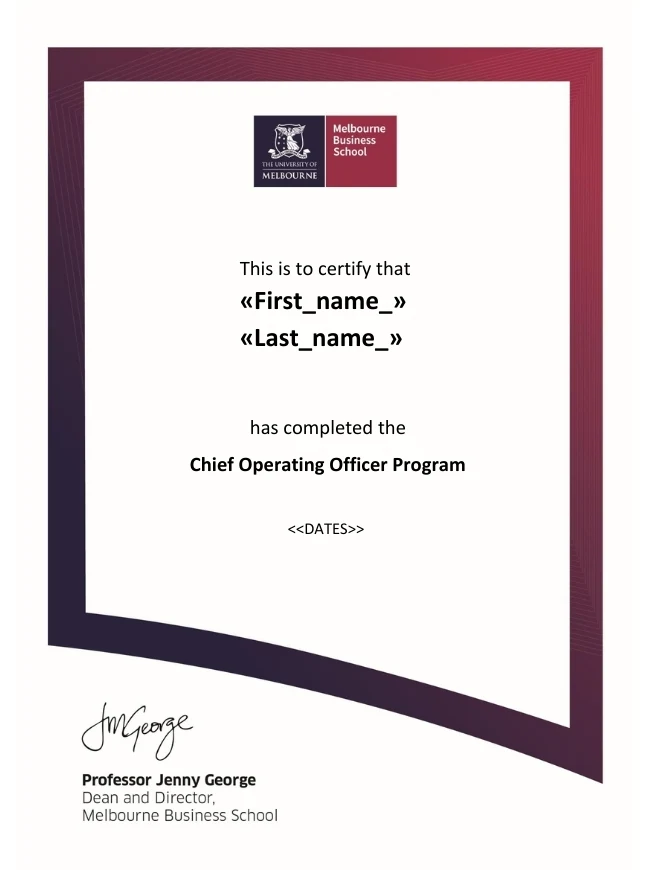
Certificate
Upon successfully completing the program, you will be awarded a Certificate of Completion from the Melbourne Business School.
Early Registrations Are Encouraged. Seats Fill Up Quickly!
Flexible payment options available.
Starts On